
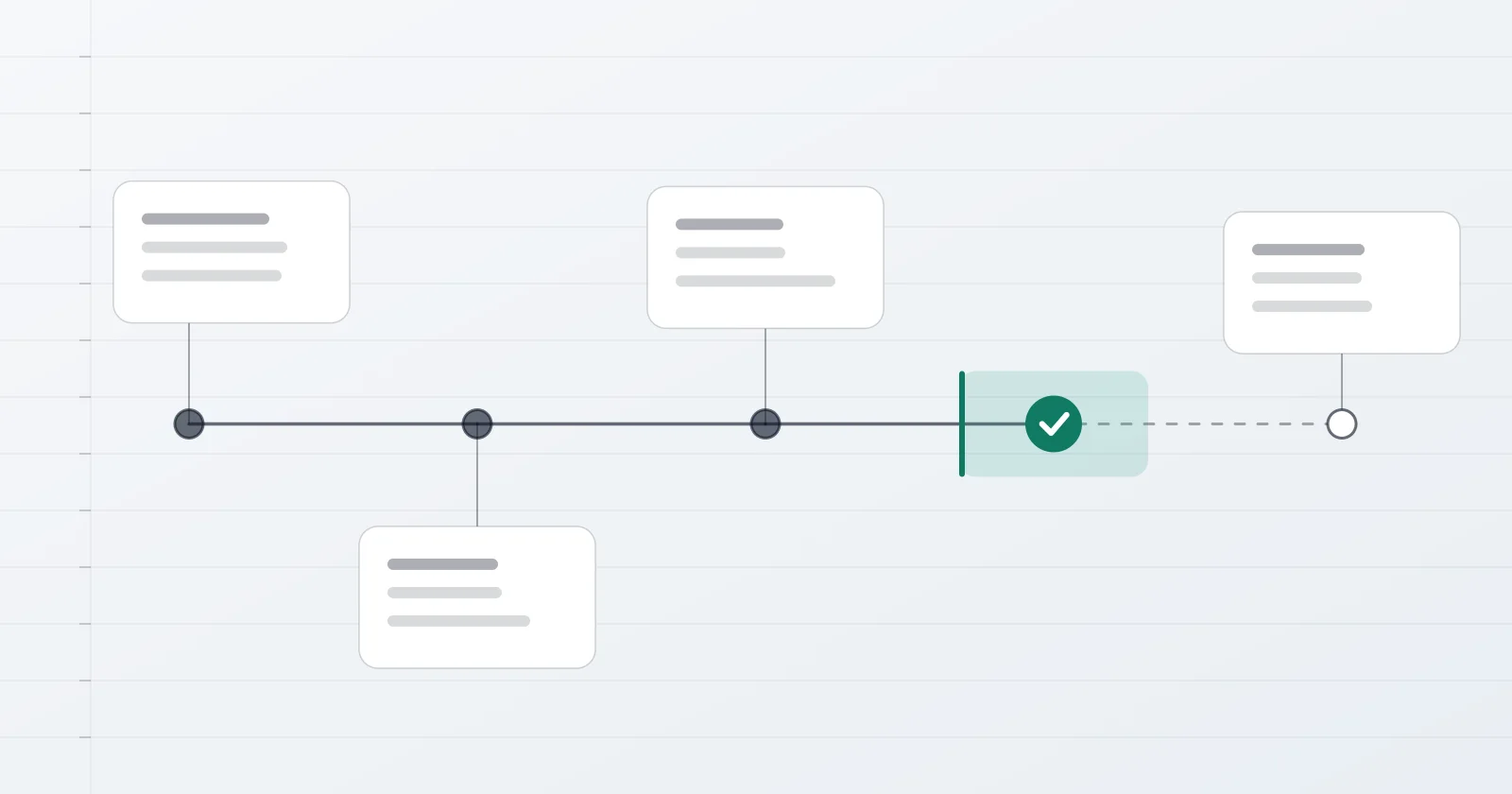
A useful coaching example shows the work, explains the decision and gives the consultant a practical next attempt.
Your manager opens an agent-prepared example about a candidate update. The proposed feedback sounds confident: the consultant should have confirmed the client’s next step earlier. Before anyone uses it, check what the consultant knew, which instruction applied and whether the client had actually answered. A polished explanation is still a proposal until those checks are done.
AI recruitment quality coaching needs a narrow acceptance decision. Is this particular example supported, appropriately scoped and useful for a learning conversation? Build that decision around the source work and the consultant’s explanation. Employee ratings, disciplinary decisions and conclusions about someone’s overall capability stay with the responsible manager and the agency’s appropriate processes.
What should an agent-prepared coaching example contain?
An agent-prepared coaching example should contain a specific piece of work, the relevant instruction, a source-linked observation and a proposed learning question. Keep the consultant’s decision context beside the suggestion. The manager should be able to accept, repair or reject it without treating the agent’s interpretation as an established account of what happened.
Start with an observable task: confirming interview arrangements, explaining a changed brief or recording an unanswered client question. Avoid broad requests such as finding weak consultants. Write the expected action in ordinary desk language, including the conditions that would have made it appropriate.
The Fair Work Ombudsman's managing underperformance guide recommends gathering documents that demonstrate a problem, including examples of an employee's work or customer feedback. That guidance concerns managing underperformance. Use its emphasis on concrete evidence to inform a developmental example, without implying that this checklist completes a formal employment process.
Prepare an example identifier, a task description, the permitted source location, the source version and the proposed question. Add a field for the manager’s decision and one for the consultant’s context. The resulting record should help someone inspect a particular suggestion. It shouldn’t become a hidden ranking of the consultant.
Give the reviewer an explicit rejection option. If the source can’t support the suggested feedback, a useful result is a rejected example with a clear reason. Asking for a better source or a narrower question beats turning an incomplete account into confident advice.
How should managers choose the permitted source work?
Choose the smallest permitted work sample that can support the learning question. Confirm the purpose, audience and access arrangements before preparing anything. Keep unrelated candidate, client and colleague information out of the example. If permission or suitability is unresolved, pause and ask the responsible manager to decide the scope.
An interview confirmation might need the relevant scheduling instruction and the final message. It doesn’t automatically need every candidate note, the consultant’s whole mailbox or private material from another colleague. Name the source boundaries in the request, so an evaluator can see when an output has wandered beyond them.
OAIC's APP 6 guidance says an APP entity can use or disclose personal information for its primary collection purpose unless an exception applies. This is a scoped privacy principle, not blanket permission to reuse recruitment records for coaching. Check the agency's applicable obligations and approved purpose with the responsible person.
Create a practice version when authentic identifying details aren’t necessary. Describe it as an instructional example, and keep enough task context for the manager to assess the suggested action. Don’t present an invented practice record as evidence of a real consultant’s conduct.
For evaluations, ask how permitted private work is selected, who can see the prepared example and how an unsuitable output is handled. Review security considerations alongside the workflow. Confirm the arrangements for the particular team before you use real records; an attractive demonstration can’t answer those questions on its own.
How do you recover the consultant's decision context?
Ask what the consultant knew, what they were trying to achieve and which constraints applied at the time. Read that explanation against the permitted source work before accepting the coaching example. A later answer, a revised instruction or an unavailable colleague shouldn’t silently become knowledge the consultant supposedly had earlier.
Build a short chronology around the task. Note the instruction available when the message was written, the response received before it and any later correction. Mark the gaps instead of filling them with assumptions about intent. A manager can then ask a focused question about the actual decision.
An instructional example: a consultant sends an update saying interview feedback is still pending. The agent proposes coaching them to include a confirmed decision date. The source shows no confirmed date. Ask whether the consultant could have requested one, rather than asserting they failed to communicate a date that didn’t exist.
Invite the consultant to explain a deliberate choice. They might have used a short message because the candidate had asked for concise updates, or held back a question while the client resolved conflicting requirements. Neither explanation settles the issue automatically. It gives the manager something specific to examine.
Keep the recovered context visibly separate from the original source. Record who supplied it and whether it changes the proposed question. If the explanation is still unconfirmed, keep that uncertainty. The manager can still discuss a possible improvement without rewriting the historical account to make the coaching example easier to use.
How should observations be separated from interpretation?
Write the observation as something the source directly supports, then label the proposed interpretation and learning question separately. Don’t let an inferred motive become a description of the consultant. Accept the example only when the manager can follow the connection between the observed work, the applicable instruction and the suggested discussion.
For example, a message may omit the agreed next contact time. That observation doesn’t establish that the consultant was careless, disengaged or generally poor at candidate communication. A narrower question asks how they would confirm the next contact arrangement in a similar situation.
OAIC's commercial AI guidance recommends records clearly indicate when information is an AI output and a probabilistic assessment rather than fact. Apply that distinction when reviewing proposed feedback that contains personal information. Keep the preparation label visible until a responsible person has checked it.
When AI recruiting agents prepare a coaching example, ask the evaluator to point to the exact sentence or action behind each observation. A link to an entire conversation isn’t enough for a disputed interpretation. The reviewer should be able to find the relevant passage, see the surrounding exchange and identify the instruction it’s being considered against.
Reject language that turns a single work sample into a trait. Repair it into a question about the task when the evidence allows. If no supported observation remains after that repair, remove the example. You don’t need to keep every generated suggestion just because the output looks complete.
What belongs in a coaching evidence checklist?
Use a checklist that tests permission, source support, decision context, learning usefulness and manager ownership. Record a disposition for the example and the reason for it. Keep the checklist attached to the proposed feedback, so reviewers can see what was checked and what’s still unresolved before any coaching conversation.
| Check | Reviewer question | Acceptable record |
|---|---|---|
Permitted scope | Was this work approved for this purpose and audience? | Named scope and responsible manager |
Source support | Can the observation be found in the actual work? | Passage and relevant source version |
Decision context | What did the consultant know at the time? | Confirmed context and unresolved gaps |
Interpretation | Is an inference presented as a fact? | Observation separated from proposal |
Learning action | Can the consultant practise a specific repair? | Clear question and bounded next attempt |
Ownership | Who decides whether to use this example? | Manager disposition and reason |
Complete the checklist before you prepare a conversation agenda. A source mismatch shouldn’t be balanced away because the learning action sounds useful. Treat unresolved permission or unsupported criticism as reasons to stop using that example.
Add a short disposition field: accept for discussion, repair before discussion or reject. Explain the choice in plain language. A repaired example might keep the observable omission and drop an unsupported explanation of why it happened.
Avoid a combined employee score. These checks assess a proposed coaching artefact, not a person’s overall performance. If a manager needs a broader performance assessment, use the agency’s appropriate process and evidence. Keep this record focused on whether a particular question belongs in a learning conversation.
What makes a coaching question useful on a recruitment desk?
Make the question about a decision the consultant can explain and an action they can practise. Refer to the actual task, the information available and the agreed instruction. Ask for a concrete next attempt the manager can review, not a general promise to be more proactive, thorough or candidate focused.
Compare two questions. “Why are your updates poor?” asks the consultant to answer an unsupported judgement. “How would you record the next contact agreement when the client cannot confirm a decision date?” identifies an actionable task and leaves room for an explanation.
The Commonwealth Work Health and Safety (Managing Psychosocial Hazards at Work) Code of Practice 2024 recommends feedback that is specific, practical, fair and clearly related to workers' performance. This is Commonwealth guidance with its own application; do not treat it as a universal agency employment rule.
Choose a repair within the consultant’s role. They can practise clarifying an unresolved question, distinguishing a proposed date from a confirmed one or checking an instruction before drafting an update. They can’t manufacture a client’s answer or remove a dependency someone else owns.
Ask the consultant to explain how the repaired action fits the actual situation. A model sentence is a starting point, not a compulsory script. The manager should check whether it respects the candidate’s request, the client’s decision and the consultant’s authority. Useful coaching makes the reasoning inspectable as well as the wording.
How should an instructional example demonstrate a repair?
Show the original task, the supported observation, the consultant’s context and a bounded alternative. Label the example instructional and keep its details in proportion. Ask the manager to decide whether the alternative fits the situation, then have the consultant explain the revised instruction before attempting a similar piece of work.
Take an instructional candidate update. The agreed instruction is to confirm who will contact the candidate next. The draft says, “We will be in touch soon.” The coaching observation is that the next contact owner isn’t stated. It doesn’t claim the consultant ignored the candidate.
The consultant explains that the client hadn’t decided who would provide feedback. A suitable repair might be to state the unresolved owner and ask the recruiter to confirm it before sending. The manager can then ask which part the consultant could complete and which part needed an authorised decision.
Include a readback: “I will identify the next contact owner, or mark that decision unresolved and bring it to the recruiter before sending.” Check that the consultant understands the conditional step. Repeating a polished sentence without recognising the unresolved dependency isn’t the learning objective.
Keep both versions for the agreed review purpose, with the manager’s explanation of the repair. If later context changes the example, revise the coaching question as well. Don’t keep the earlier criticism as settled just because a corrected version exists. The source work remains the reference for the discussion.
How should managers handle disputed or incomplete examples?
Pause the disputed example and identify the precise disagreement. Check the source, the instruction and the consultant’s explanation before choosing a disposition. If the evidence stays incomplete, record that limitation and use a narrower learning question or drop the example. Don’t ask the consultant to accept an unsupported account to keep the session moving.
A dispute may concern attribution: the consultant didn’t write the message being discussed. It may concern timing: the instruction changed after the task. It may concern meaning: the client used tentative language that the preparation treated as confirmed. Each one needs a different repair.
OAIC's APP 10 guidance says an APP entity must take reasonable steps to ensure personal information used or disclosed is accurate, up to date, complete and relevant, having regard to that purpose. Keep that qualified standard in view when proposed feedback includes personal information.
Ask who owns resolving the disagreement. A manager may need the source owner to confirm the relevant instruction, or the consultant to supply missing context. Keep the example out of an approved coaching pack until the disputed element has a clear disposition.
An incomplete example can still reveal a preparation problem. Record that the evaluator couldn’t recover the necessary context, rather than marking the consultant down for it. Use the finding to refine the evaluation request: specify the source version, exclude uncertain attribution or require an explicit unanswered question. Assess the preparation before drawing conclusions about the person.
How should you evaluate the agent's preparation?
Evaluate whether the proposed example stays within permitted scope, finds the supporting work and separates observation from inference. Include cases with missing context, changed instructions and disputed attribution. The manager should be able to reject or repair the output. Assess the preparation against these checks, without assuming any particular product already supports them.
Prepare a small, approved set of contrasting instructional cases. One can contain a supported omission. Another can show that the apparent omission came from an unanswered client question. A third can contain a later instruction that shouldn’t be applied retrospectively.
Record the original request, the prepared example and the reviewer’s disposition for each case. Ask what the reviewer had to correct. Did they repair attribution, remove a personality judgement or recover the applicable instruction? Describe the correction in ordinary work terms instead of inventing an overall accuracy percentage.
OAIC's commercial AI guidance says a human user should be responsible for verifying the accuracy of personal information obtained through AI and be able to overturn decisions made. Keep that human responsibility explicit in the evaluation and in the proposed coaching workflow.
Choose a reviewer who can challenge the example’s account of the task. Give them the instruction and the source work before showing the proposed feedback. Ask them to describe the observable issue in their own words, then compare that description with the prepared example. That helps the evaluation show whether a persuasive explanation has displaced the actual learning question.
Keep a separate note for reviewer disagreement. If two managers read the same work differently, ask which instruction or missing context would resolve the difference. Don’t ask the agent to pick a manager’s preferred interpretation just to create consistency. Narrow the example until the observation and proposed discussion make sense to the people responsible for using it.
Include a case where rejecting the example is the right decision. The manager may find that the consultant followed the available instruction and that the proposed improvement depends on a later client answer. Record why rejection was right and what a revised request would need. A workflow that leaves room for this result gives the manager a practical way to stop unsupported feedback before it reaches a conversation.
Review the preparation request and the example separately. A well-written example may answer a badly scoped request. Revise the request before repeating it, and explain the change. Acceptance should mean the manager has a suitable artefact for discussion, not that the system has assessed the employee or approved a consequential employment decision.
Where does FluxHire fit in this evaluation?
FluxHire is building an AI agent framework where agents prepare work and recruiters review and approve it. During early access, supported records, integrations and review steps are confirmed with each team. Evaluate coaching preparation as a proposed application against that confirmed scope, with managers owning feedback and consequential decisions about their people.
Start with the agency’s learning decision and the evidence needed to make it. Ask whether the permitted source work can be reviewed within the team’s confirmed arrangements. Then look at how a proposed example would be checked, repaired and accepted. Treat any unconfirmed behaviour as an evaluation question.
Read the Australian AI recruitment overview for the broader context, and use the AI agent framework guide when you’re considering how this fits alongside current systems. Neither replaces a team-specific discussion about permitted private records or the manager’s decision process.
Keep the commercial discussion tied to the work. Which source can the reviewer inspect? Which approval stays with the recruiter? Who decides whether feedback is appropriate for a coaching conversation? Use the software cost guide to frame evaluation questions about review effort and scope.
Ask for a demonstration using an approved instructional example before you consider live private material. State what a successful preparation would contain and what would make it unacceptable. A manager should leave the discussion able to describe the boundaries in plain language, including the circumstances in which they’d stop or revise the proposed workflow.
What should the manager decide before the example is used?
Decide whether the example is supported, permitted and useful for this particular learning conversation. Confirm the source context, choose a clear disposition and own the proposed feedback. Give the consultant a chance to explain the decision and practise a repair. Keep consequential employment decisions within the agency’s appropriate management processes.
Make the final check a readback of the accepted example. The manager describes the task, the supported observation and the proposed question. The consultant names the instruction they’d follow next time and any unresolved decision they’d bring back for approval.
If that readback exposes a mismatch, repair the example before treating it as ready. A source-linked record should support a fair discussion. It shouldn’t pressure the consultant to agree with an interpretation they can’t find in their own work.
Arrange a follow-up that checks the agreed learning action, not the employee’s willingness to accept criticism. Choose a comparable task, confirm its instruction and review the resulting work with the same care. If circumstances differ, talk about that difference before deciding whether the repair was relevant.
Keep the manager’s final note brief and specific: the example used, the question discussed, the context added and the next practice action. Retain only what the approved purpose requires. The useful outcome is an understandable learning decision with a responsible owner, supported by the actual work and open to correction when the context changes.
Frequently asked questions
Can an agent decide whether a consultant needs coaching?
Use an agent-prepared example as a proposal for a manager to inspect. Ask whether the source supports a specific learning question, and recover the consultant's decision context before using it. The manager owns whether coaching is appropriate and any consequential decisions. Do not turn an example acceptance checklist into employee grading.
What source work should a coaching example use?
Choose the smallest permitted sample that can support the agreed learning question. Name its purpose, audience and boundaries before preparation. An interview confirmation may need the relevant instruction and message, rather than a complete mailbox. Pause if the responsible manager has not confirmed whether private work is suitable for that use.
How do you distinguish observation from interpretation?
An observation describes what the source directly supports, such as an omitted contact owner. An interpretation proposes what that might mean or how the task could improve. Label the two separately, and ask the manager to check the connection. Remove claims about motives or traits that the work cannot establish.
What if the consultant disputes the example?
Identify the exact disagreement and pause use of that example. Check attribution, timing, the applicable instruction and any missing context. Ask the responsible person to resolve the issue or choose a narrower learning question. Do not preserve unsupported criticism merely because the prepared example has already been added to a pack.
Should the checklist produce an employee score?
Keep the checklist focused on whether a proposed coaching example is supported, permitted and useful. Record an acceptance, repair or rejection with a reason. A combined employee score changes that purpose and requires a separate management decision. Use the agency's appropriate process when a broader performance assessment is actually needed.
How do you test a proposed coaching workflow?
Use approved instructional cases with contrasting conditions, including missing context, changed instructions and disputed attribution. Inspect the source links and record the manager's disposition and correction. Evaluate whether the preparation supports a bounded learning conversation. Do not infer product availability or employee capability from a successful demonstration of one practice case.
What should a consultant read back after coaching?
Ask the consultant to explain the instruction they would follow on a comparable task, including any condition that requires a recruiter or manager decision. A readback should show understanding of the reasoning, rather than repetition of a model sentence. Review the next practice attempt against its actual context and permitted source work.
Can FluxHire prepare coaching examples during early access?
Treat coaching preparation as a proposed application to discuss with FluxHire, rather than an assumed feature. FluxHire is building an AI agent framework where agents prepare work and recruiters review and approve it. Supported records, integrations and review steps are confirmed with each team during early access before a workflow is evaluated.